

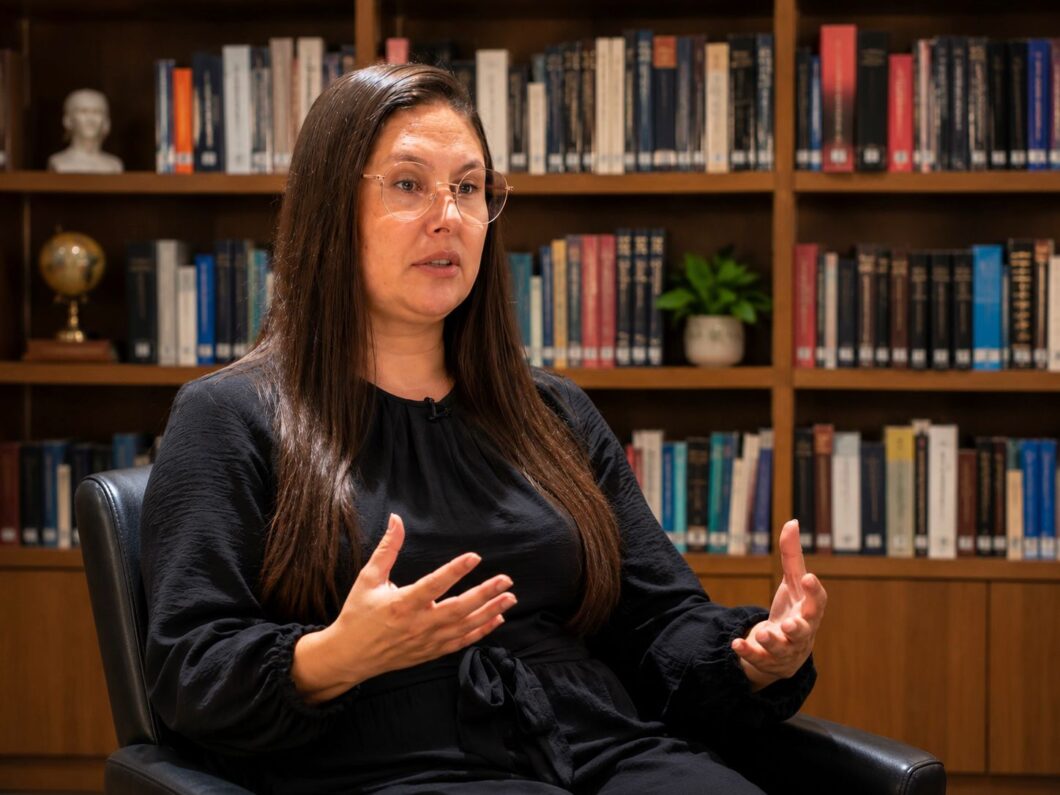
As the United States faces a growing demand for child development, learning intervention, and mental health services, professionals with multidisciplinary expertise are becoming increasingly important within healthcare and educational systems. Among them is Brazilian specialist Taise de Lima Modesto, whose career as a Psychopedagogical Specialist and Multidisciplinary Learning & Mental Health Intervention Consultant has positioned her as a respected voice in integrated childhood development and early intervention.
Recent data from the Centers for Disease Control and Prevention (CDC) reveals that approximately 1 in 6 children in the United States between the ages of 3 and 17 has a developmental disability, including ADHD, autism spectrum disorder, learning disabilities, speech and language disorders, and cognitive delays. Autism alone now affects 1 in 36 children nationwide, reflecting a significant increase over the past decade.
At the same time, mental health indicators among children and adolescents continue to worsen. According to the U.S. Department of Health and Human Services, rates of anxiety, depression, emotional dysregulation, and behavioral disorders have risen substantially in recent years, creating additional pressure on schools, healthcare systems, and families. Specialists across the country report growing waiting lists for developmental evaluations, behavioral therapies, educational interventions, and psychological support services.
Within this context, experts emphasize that the current challenge extends beyond diagnosis. The primary issue increasingly involves fragmented care systems that separate educational, emotional, cognitive, and behavioral interventions instead of integrating them.
“We are no longer dealing with isolated developmental challenges,” said Taise de Lima Modesto. “Children today frequently present overlapping cognitive, emotional, behavioral, and communication needs, but the system still approaches these areas separately. That fragmentation delays progress and places unnecessary pressure on families.”
Before expanding her professional trajectory internationally, Taise built a recognized career in Brazil focused on psychopedagogy, cognitive development, neurodevelopmental disorders, learning disabilities, and mental health intervention strategies. Her work has concentrated on early identification of developmental delays, emotional regulation difficulties, school adaptation challenges, and learning disorders such as ADHD and autism spectrum disorder.
Her methodology is grounded in multidisciplinary intervention, integrating psychopedagogical assessment, family guidance, emotional support, educational strategies, and coordinated developmental care. Throughout her career, she has received professional recognition for her contributions to inclusive educational practices and integrated intervention models.
Beyond direct work with children and adolescents, Taise has also specialized in training parents, educators, and professionals, helping families better understand developmental warning signs and intervention pathways. “Families are often the first to recognize behavioral or learning changes, but they do not always have access to clear guidance,” she explained. “Early orientation and multidisciplinary support are essential because when families understand the process, intervention becomes significantly more effective.”
The need for this type of expertise is particularly evident in Florida. According to the U.S. Census Bureau, Florida remains one of the fastest-growing states in the country, with rapid population growth increasing demand for developmental, educational, and mental health services. At the same time, workforce reports from the Florida Department of Health continue to identify shortages of behavioral health professionals, child development specialists, and educational intervention providers across multiple regions of the state.
This imbalance between rising demand and limited access has intensified discussions around integrated care models, especially multidisciplinary environments where specialists collaborate to address the child as a whole rather than through isolated services.
Taise’s professional vision follows precisely this direction. She is currently planning the launch of a Multidisciplinary Learning and Mental Health Center in the United States, designed to provide coordinated psychopedagogical services, psychological support, occupational therapy, developmental intervention, and family guidance within a unified structure.
According to her, one of the main goals is to reduce fragmentation in childhood intervention systems. “When professionals work separately, children often receive disconnected care,” she said. “When multidisciplinary teams work together, we see faster developmental progress, stronger emotional outcomes, and more consistent long-term results.”
As national discussions surrounding childhood development and mental health continue to evolve, professionals like Taise de Lima Modesto are helping redefine how intervention services are delivered, shifting from isolated approaches toward integrated, family-centered, and multidisciplinary models of care. In a system searching for scalable and effective solutions, her professional trajectory reflects both the urgency of the current moment and the direction many specialists believe the field must follow.